
What Repeated Reading Really Builds.

Two books, one evening and what children often understand when we give them space to think.
There is one way of reading to children that many of us do without even noticing.
We explain too fast.
The page turns and before the child has time to look properly, we start telling them what it means. We name the feeling. We explain the lesson. We point to what they should notice.
It comes from a good place. But sometimes it leaves very little space for the child to think.
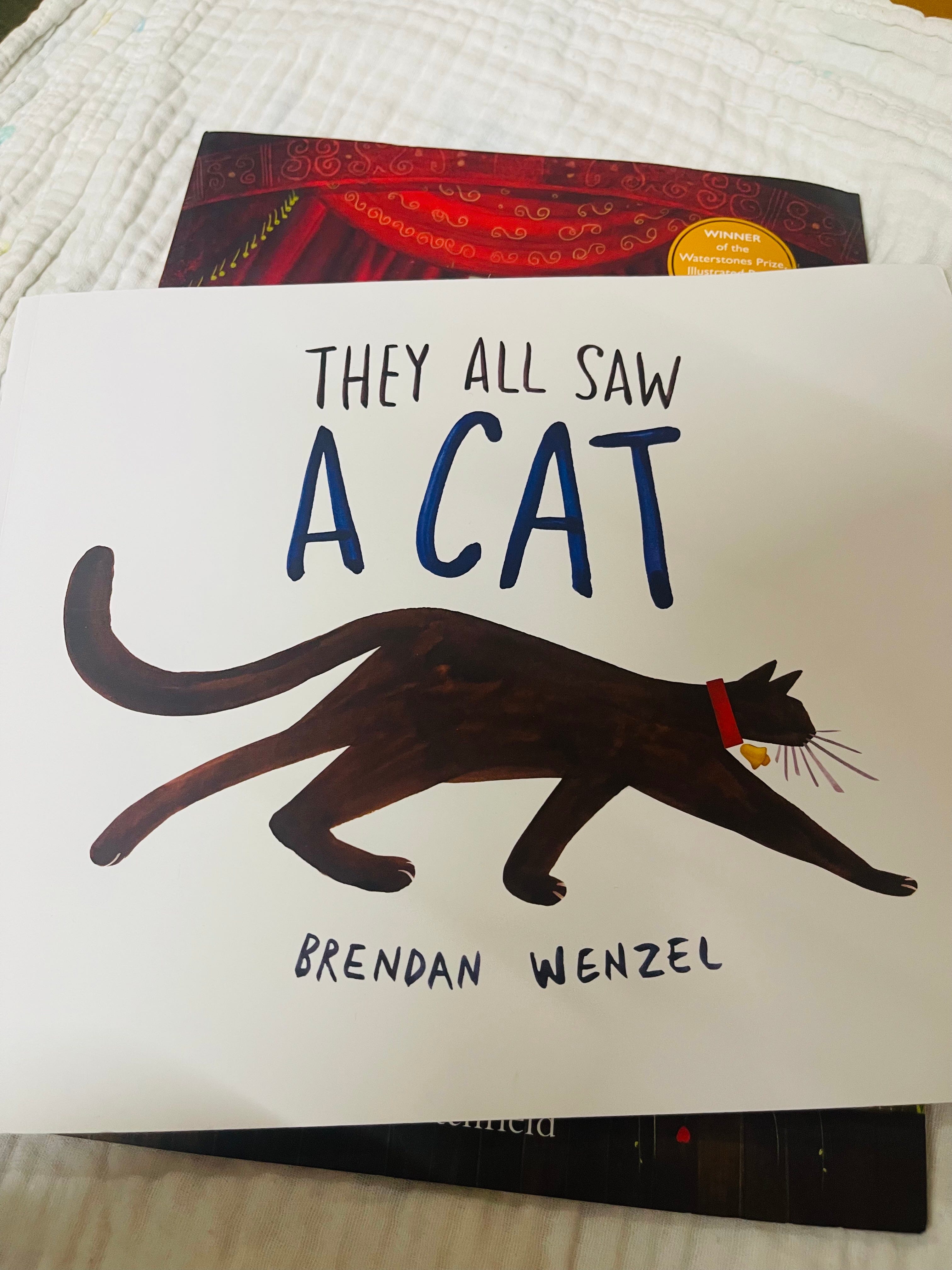
Last week we read They All Saw a Cat by Brendan Wenzel. Six times in one evening.
It is a simple book on the surface. A cat walks through the world and different animals see it in different ways. The child sees one cat. The fish sees another. The bee sees another. The fox too. Every page changes a little. The shape changes. The colour changes. The cat is still the cat. But it does not look the same to everyone.
By the third read I noticed something.
He was not only looking at the pictures anymore. He was studying them. He was watching how the cat changed from one page to the next. Nobody asked him to do that. I did not stop and explain it. I did not say, “Look, everyone has a different perspective.” He just started seeing it on his own.
By the sixth read I asked him one question.
At the end of the book, what does the cat see?
He thought for a little bit and said, “Its reflection.”
He is three and a half.
The book does not clearly give that answer. He came to it himself. After reading the same book again and again. After looking closely. After holding the whole pattern in his mind.
I stayed quiet for a moment because I did not want to jump in and break it.
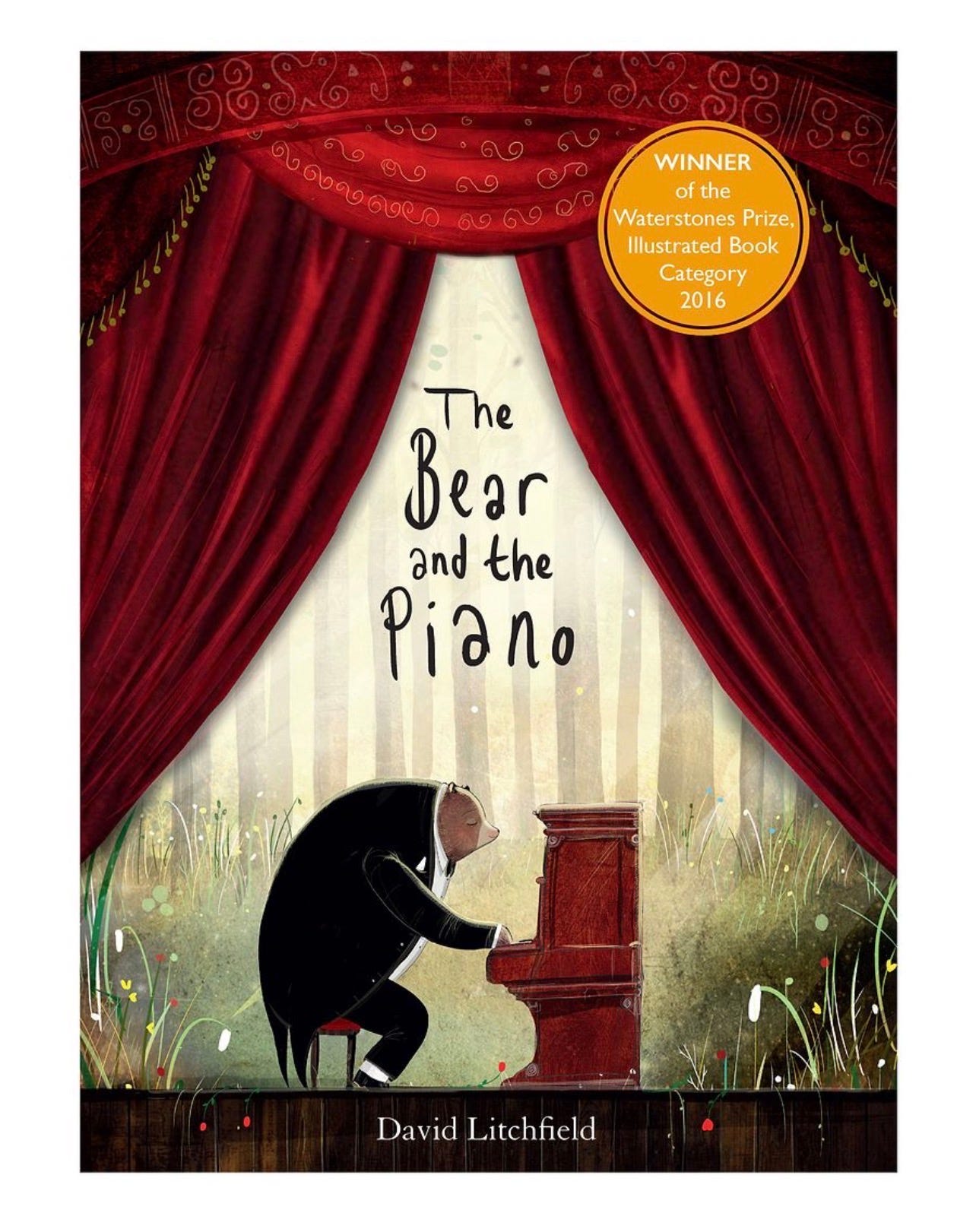
That same evening we also read The Bear and the Piano by David Litchfield.
This book feels softer when you first read it. But emotionally it is deeper. A bear finds a piano in the forest. He learns to play. He becomes famous. He travels. He performs. Then later he feels sad.
I asked him why the bear was sad.
He said, “He missed the forest. And his friends.”
That answer stayed with me.
He did not give a simple answer like “because he was far away.” He understood something more than that. He understood that the bear missed a place. And he missed the people in it. He felt both losses.
What also stood out to me was this. He did not rush to the happy ending. He stayed with the sad part. He understood that even something beautiful can come with loss.
I kept thinking about these two moments.
In both books he went beyond what was directly on the page. He was not only following the story. He was thinking under it.
In They All Saw a Cat the deeper question is not only what the animals see. It is also what something is when everyone sees it differently.
In The Bear and the Piano the deeper question is not only that the bear became successful. It is also what we give up when we go after something.
These are not small questions. They do not have one neat answer. But children do not always need neat answers. Sometimes they only need time. Time to look. Time to hear the same story again. Time to sit with something before an adult comes in and explains everything.
I think this is one of the real gifts of reading.
Not only vocabulary. Not only language. Not only “comprehension” in the way schools measure it.
Reading also builds the ability to stay with a thought for longer. To notice patterns. To feel something without needing to close it too quickly. To think a little deeper before speaking.
And I think repeated reading helps a lot with that.
When a child asks for the same book again and again, it can look repetitive to us. But for them, something deeper is happening. The first time they hear the story. The next time they notice details. Then they start making connections. Then they begin to understand something that was sitting quietly underneath the words all along.
That kind of thinking does not always come from teaching.
Very often it comes from space.
So if you read with your child, this is something worth remembering. You do not need to explain every page. You do not need to pull out the lesson too early. Sometimes the best thing you can do is read the book again and let the child do more of the work.
If you have not read these two books, I really recommend both.
They All Saw a Cat is wonderful from around age three. It becomes better with repeated reading. In fact that is the whole beauty of it.
The Bear and the Piano works across a wider age range. Maybe from three to seven. But I would read it slowly. Especially the sad parts. That is where the heart of the story is.
With both books, ask one question at the end if you want to ask anything at all.
Then wait.
Sometimes the answer tells you much more about how your child thinks than any explanation you were about to give.
Code and Crayons is about raising children who can think — not just perform thinking. If this resonated, share it with a parent who reads to their child.
Children can be so profound when we just take the time to slow down with them and notice things. Beautiful. Thanks for sharing.
In search of connection today’s parents steal discovery from their children. The hardest thing to do when raising children is nothing. That is a gift worth giving.